


Natural Pain Management Therapies That Help
Pain has a way of shrinking your day. A stiff neck can turn work into a grind, an aching lower back can make school drop-off feel harder than it should, and ongoing tension can leave you flat even after a full night in bed. That is why so many people look for natural pain management therapies that do more than mask discomfort for a few hours. They want support that helps the body settle, recover and function better.
For many adults, especially those juggling work, family and the usual wear and tear of life, the appeal is simple. Natural therapies are non-invasive, practical and often deeply restorative. They can help reduce muscular tightness, calm stress responses and support better movement, while also giving you space to slow down and reconnect with how your body is actually feeling.
Why natural pain management therapies appeal to so many people
Not all pain is the same. Some pain comes from overuse, poor posture or sitting too long at a desk. Some follows sport, training or physical work. Some builds quietly through stress, clenching and shallow breathing. And some lingers after an injury, even when the original issue has started to heal.
That is where a holistic approach can make sense. Rather than focusing only on the sore spot, natural pain management therapies often look at the bigger picture. They consider how muscles are compensating, how stress may be contributing, and how circulation, rest and nervous system regulation affect recovery.
This does not mean every therapy suits every person or every condition. It depends on the type of pain, how long it has been there, your health history and what your body responds to best. For some people, hands-on treatment brings the biggest shift. For others, acupuncture helps settle persistent discomfort that has not responded well to stretching or massage alone. Often, the best results come from matching the therapy to the person rather than chasing a one-size-fits-all fix.
Acupuncture for pain, tension and recovery
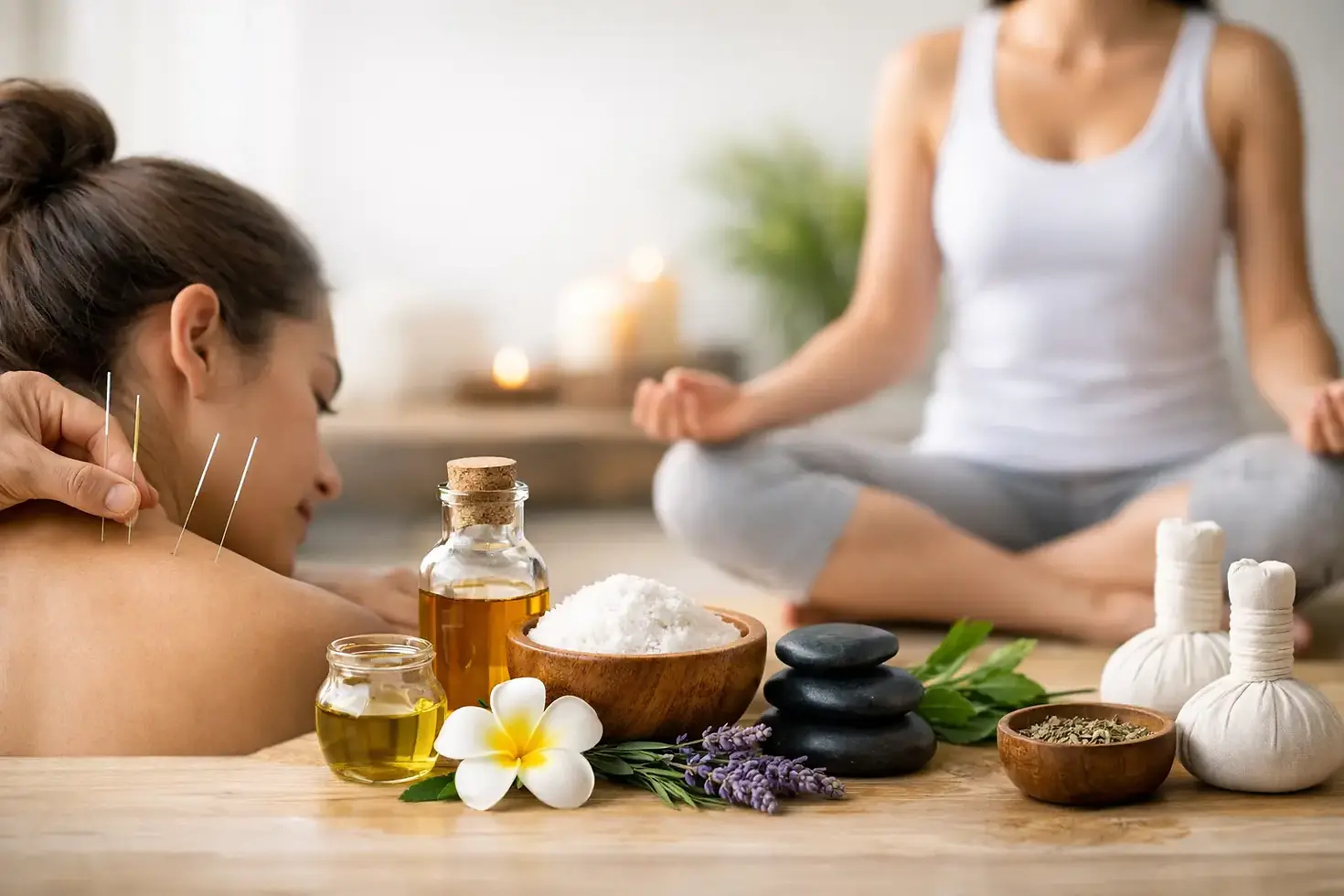
Acupuncture has been used for centuries, and one reason it remains popular is that it can support several layers of discomfort at once. Fine needles are placed at specific points on the body to encourage balance, ease tension and promote the body’s natural healing response.
People often seek acupuncture for neck and shoulder tension, headaches, lower back pain, joint discomfort and general muscular tightness. It can also be helpful when stress is playing a part in physical symptoms. If your body feels stuck in that braced, always-on mode, acupuncture may help calm the system enough for pain levels to ease.
The experience is often gentler than people expect. Many first-time clients worry about the needles, but the sensation is usually brief and mild. Once settled, people commonly describe feeling deeply relaxed. That matters, because pain and stress often feed each other. When the body feels safer and more settled, it can sometimes let go of protective tension that has been hanging on for too long.
There are trade-offs, of course. Acupuncture is not an instant answer for every type of pain, and some conditions need a course of care rather than one visit. But for people wanting a natural option that supports both pain relief and overall balance, it can be a valuable part of treatment.
Remedial massage for muscular pain and restricted movement
When pain is tied to tight muscles, overworked tissue or postural strain, remedial massage is often one of the most practical places to start. This treatment is more focused than a relaxation massage. It works into areas of tension, targeting muscles and soft tissue that may be contributing to pain, poor movement or referred discomfort.
A sore shoulder does not always begin in the shoulder. A lower back issue may be linked to the hips or glutes. Jaw tension can be tied to stress, neck tightness and upper back restriction. Remedial massage looks at those patterns, which is why it can feel more purposeful and specific than a standard massage.
That said, firmer does not always mean better. Effective remedial work should be tailored to what your body can tolerate and what it actually needs. If tissue is already inflamed or highly sensitive, an overly aggressive approach can leave you feeling worse before you feel better. Good care means adjusting pressure and technique so treatment supports recovery rather than pushing through pain for the sake of it.
For office workers, tradies, parents carrying toddlers, gym-goers and anyone dealing with regular muscular strain, remedial massage can help reduce tightness, improve circulation and restore easier movement.
Relaxation massage still has a place in pain relief
It is easy to assume that only targeted, clinical-style treatments are useful for pain. In reality, relaxation massage can play a very real role in reducing discomfort, especially when stress is a major contributor.
When you are run down, your shoulders creep up, your breathing shortens and your muscles stay switched on for longer than they should. Over time, that can create widespread aches, headaches and a constant feeling of heaviness through the body. A relaxation massage helps slow things down. It encourages circulation, softens general tension and gives the nervous system a chance to step out of fight-or-flight mode.
This kind of treatment may not be the best choice for an acute injury or highly specific muscular dysfunction. But if your pain is tied to fatigue, overwhelm or general body tension, it can be surprisingly effective. Sometimes the most helpful step is not doing more to the body, but giving it a safe chance to stop bracing.
Reflexology and whole-body balance
Reflexology is often chosen by people who want a gentle, grounding therapy that supports relaxation and overall wellbeing. It involves applying pressure to specific points on the feet, with the aim of encouraging balance throughout the body.
While reflexology is not a replacement for hands-on treatment of a clear muscular injury, it can be useful for stress-related tension, fatigue and that unsettled feeling where the whole body seems out of sync. Many people find it deeply calming, which can make a difference when pain is being amplified by poor sleep, mental load or ongoing stress.
The value of reflexology is often in how it helps you feel as a whole person, not just in one painful area. For someone who feels frazzled, tight and flat all at once, that broader sense of restoration can be exactly what is needed.
Hot stone massage for deep-seated tightness
Heat can be a powerful tool for muscular discomfort, and hot stone massage uses that warmth to help tight tissue soften more easily. The heated stones allow the body to relax deeply, which can make it easier to release stubborn tension without relying on heavy pressure.
This can be especially appealing if you carry tightness through the back, shoulders or legs but do not enjoy very firm massage. The warmth adds a soothing element that many people find both comforting and effective.
Like any therapy, it depends on the situation. If inflammation is present, heat may not always be ideal. That is why choosing the right treatment matters. The goal is not simply to book any massage, but to match the method to what your body is dealing with.
Choosing the right natural pain management therapies for you
The best therapy is the one that fits your body, your pain pattern and your stage of recovery. If your main issue is muscular tension and restricted movement, remedial massage may be the most direct option. If pain is persistent, stress-linked or difficult to shift, acupuncture may offer a different pathway. If you are exhausted, wired and carrying tension everywhere, relaxation massage or reflexology might be the better starting point.
Sometimes people need focused treatment. Sometimes they need gentler support. And sometimes they need a combination across time, especially when pain has been building for months rather than days.
At Just4U Wellness Clinic, that whole-person view is central to care. The aim is not just to chase symptoms, but to help people feel more comfortable in their bodies again - with therapies that support relief, recovery and a greater sense of balance.
If pain has been quietly shaping your days, it may be worth choosing care that helps your body do more than cope. The right treatment can be the start of feeling like yourself again.


Comments