


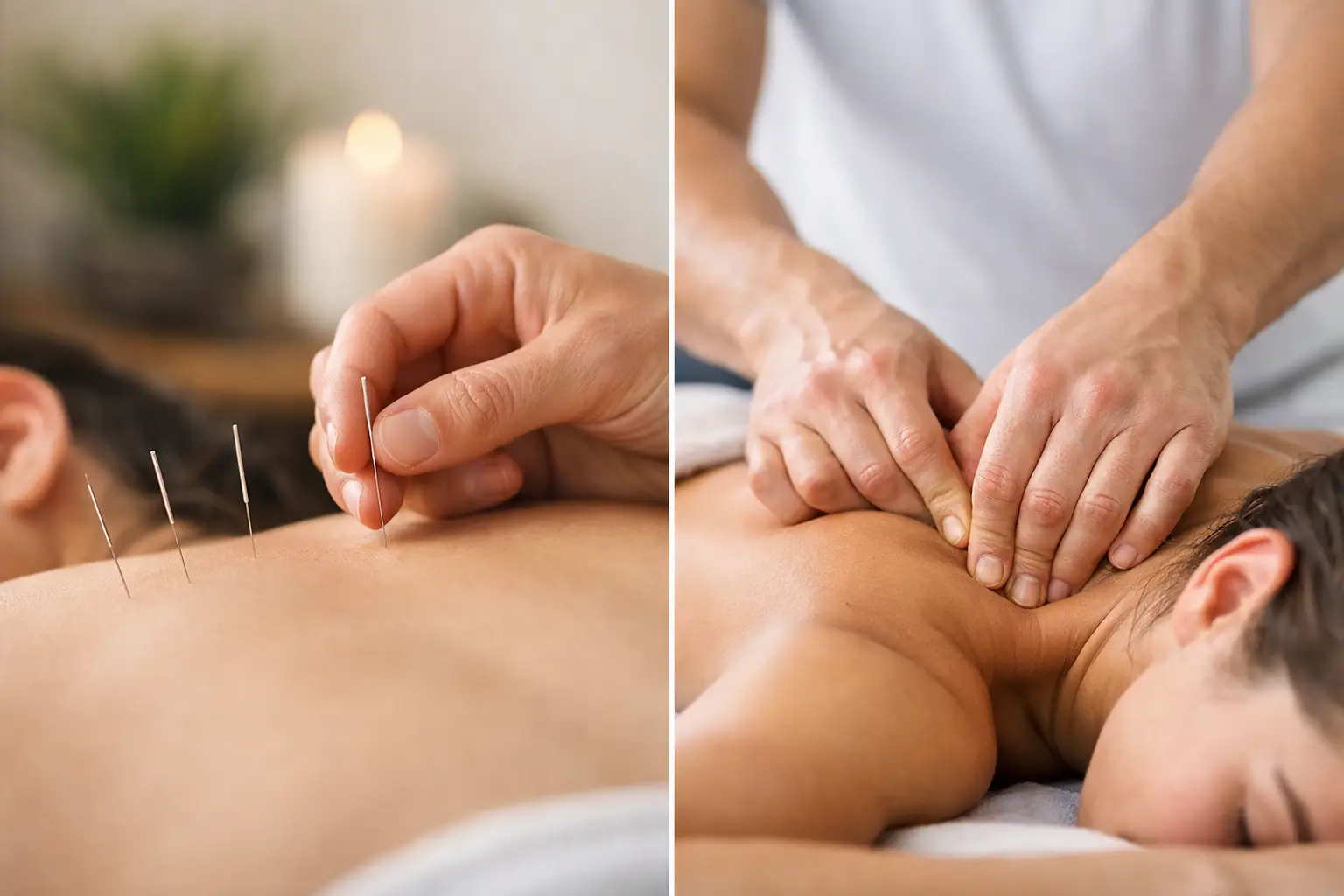
Acupuncture vs Remedial Massage
A sore neck after long days at the desk. Tight shoulders that never seem to switch off. A lower back that flares up after gardening, gym sessions or carrying the kids. When people ask about acupuncture vs remedial massage, they are usually not chasing theory - they want to know which treatment will actually help them feel better.
The honest answer is that both can be effective, but they work in different ways. One is not automatically better than the other. It depends on what your body is dealing with, how your symptoms show up, and what kind of support feels right for you.
Acupuncture vs remedial massage: what is the difference?
Acupuncture uses very fine needles placed at specific points on the body. In traditional practice, this is used to support balance and help the body regulate itself. In modern clinical settings, acupuncture is also commonly used to assist with pain, muscular tightness, stress, headaches, tension and recovery.
Remedial massage is a hands-on treatment focused on muscles, soft tissue and movement. It uses techniques such as deep tissue work, trigger point therapy and targeted pressure to release tension, improve circulation and address areas of strain or restriction.
Put simply, acupuncture works through needle stimulation at selected points, while remedial massage works through manual treatment of the muscles and surrounding tissue. Both aim to reduce discomfort and help the body function better, but the path they take is different.
When acupuncture may be the better fit
Acupuncture can be a good option when your symptoms feel broader than one tight muscle. For example, some people come in with recurring tension headaches, stress-related tightness, poor sleep, jaw tension or ongoing pain that seems to shift or linger. In these cases, acupuncture may help by supporting the nervous system as well as the painful area itself.
It can also suit people who do not want heavy pressure on already sensitive muscles. If your neck or back feels aggravated, inflamed or reactive to touch, remedial massage may feel too intense at first. Acupuncture is often gentler in that sense, even though it still aims to create a therapeutic response.
Many people also choose acupuncture when stress is part of the picture. If your shoulders are tight because you are constantly switched on, clenching your jaw, rushing from work to school pick-up to chores, the treatment may help calm the body as much as it addresses the physical symptoms.
That said, not everyone loves needles. Even though acupuncture needles are extremely fine and many people find the treatment relaxing, some clients simply feel more comfortable with a hands-on approach. Comfort matters. A treatment only helps if you are willing to come in and actually receive it.
When remedial massage may be the better fit
Remedial massage is often the clearer choice when the problem is strongly muscular and easy to locate. If you can point to a knot between the shoulder blades, tight hamstrings, a stiff calf, postural strain from desk work or soreness after exercise, massage gives direct attention to the tissue involved.
This is why so many people turn to remedial massage for work tension, sports recovery and everyday aches. You can often feel exactly where the pressure is being applied and notice the release through the muscle as the session progresses.
It also helps people who respond well to physical manipulation and movement-based care. If you like the sense of having tight spots worked through, stretching incorporated where needed, and the body physically loosened, remedial massage can be very satisfying.
There are trade-offs, though. Deep or targeted massage can leave you feeling tender for a day or two, especially if the muscles are quite tight. And if your pain is driven less by the muscle itself and more by stress, nerve sensitivity or a pattern that keeps returning, massage may bring relief but not always the broader sense of reset some people are after.
Acupuncture vs remedial massage for common concerns
For neck and shoulder tension, either treatment can help. If the area feels dense, knotted and postural, remedial massage may be the first pick. If the tension comes with headaches, poor sleep or stress, acupuncture may be especially useful.
For lower back pain, the choice often depends on how the pain behaves. Tight, overworked muscles may respond well to remedial massage. Back pain that is recurring, hard to settle or linked with general tension patterns may suit acupuncture or a combination approach.
For stress and fatigue, acupuncture often has the edge because of the way many people experience it as calming and regulating. Remedial massage can absolutely help here too, especially when stress is being carried physically in the shoulders, back and jaw.
For sports soreness and recovery, remedial massage is a common go-to because it directly addresses overworked muscles, tight fascia and restricted movement. Acupuncture may still play a role, particularly if pain is lingering or recovery feels slower than expected.
For headaches, it depends on the trigger. If they are linked to neck tension and postural strain, massage may help. If they are recurring and tied in with stress, jaw clenching or a wider pattern of tension, acupuncture may be worth considering.
What does each treatment feel like?
A lot of hesitation comes down to not knowing what to expect.
During acupuncture, the needles used are very fine. You may feel a small sensation as they are inserted, followed by heaviness, warmth, tingling or a dull ache around some points. Many clients are surprised by how relaxing it feels once the treatment is underway.
During remedial massage, you can expect more active sensation. Some areas may feel relieving straight away, while others can be tender as tight tissue is worked through. A good therapist adjusts pressure to your needs, because effective treatment does not have to mean gritting your teeth through the whole session.
Neither experience should feel frightening or unbearable. The right treatment should feel supportive, safe and tailored to your body on the day.
Can you have both acupuncture and remedial massage?
Yes, and for many people this is where the real value sits.
Acupuncture and remedial massage do not have to compete. They can complement each other beautifully. Massage can release soft tissue tension and improve movement in a direct way. Acupuncture can support pain relief, relaxation and broader systemic balance. When used together, they may help address both the local sore spot and the bigger pattern behind it.
This combined approach can be particularly helpful for people dealing with stubborn neck and shoulder tension, recurring back pain, stress-related tightness or recovery from physical strain. One treatment works on the muscles with hands-on precision, while the other supports the body's own healing response in a different way.
At Just4U Wellness Clinic, this combination is part of what makes care feel more personal. If one approach suits you best, that is fine. If your body would benefit from both, you can access both in one place.
How to choose the right treatment for you
If you are trying to decide between acupuncture vs remedial massage, start with the question: what is bothering you most?
If your main issue is muscular tightness, reduced movement, postural strain or sports soreness, remedial massage is often a sensible first step. If your symptoms are mixed with stress, headaches, poor sleep, ongoing pain or a sense that your whole system feels out of balance, acupuncture may be the better starting point.
You should also think about personal preference. Some people love a practical, hands-on treatment and want to feel the muscles being worked. Others want a quieter, more calming session that does not rely on firm pressure. Neither preference is wrong.
Timing matters too. If you are in an acute flare-up and the area feels too sore to touch, acupuncture may feel more manageable. If you are maintaining your body through work demands, training or regular tension, remedial massage may fit neatly into your routine.
Most importantly, you do not need to solve it perfectly before booking. A good clinic will guide you based on your symptoms, comfort level and goals.
The best treatment is not the one that sounds more impressive. It is the one that meets your body where it is, supports real relief, and helps you feel more like yourself again.


Comments