


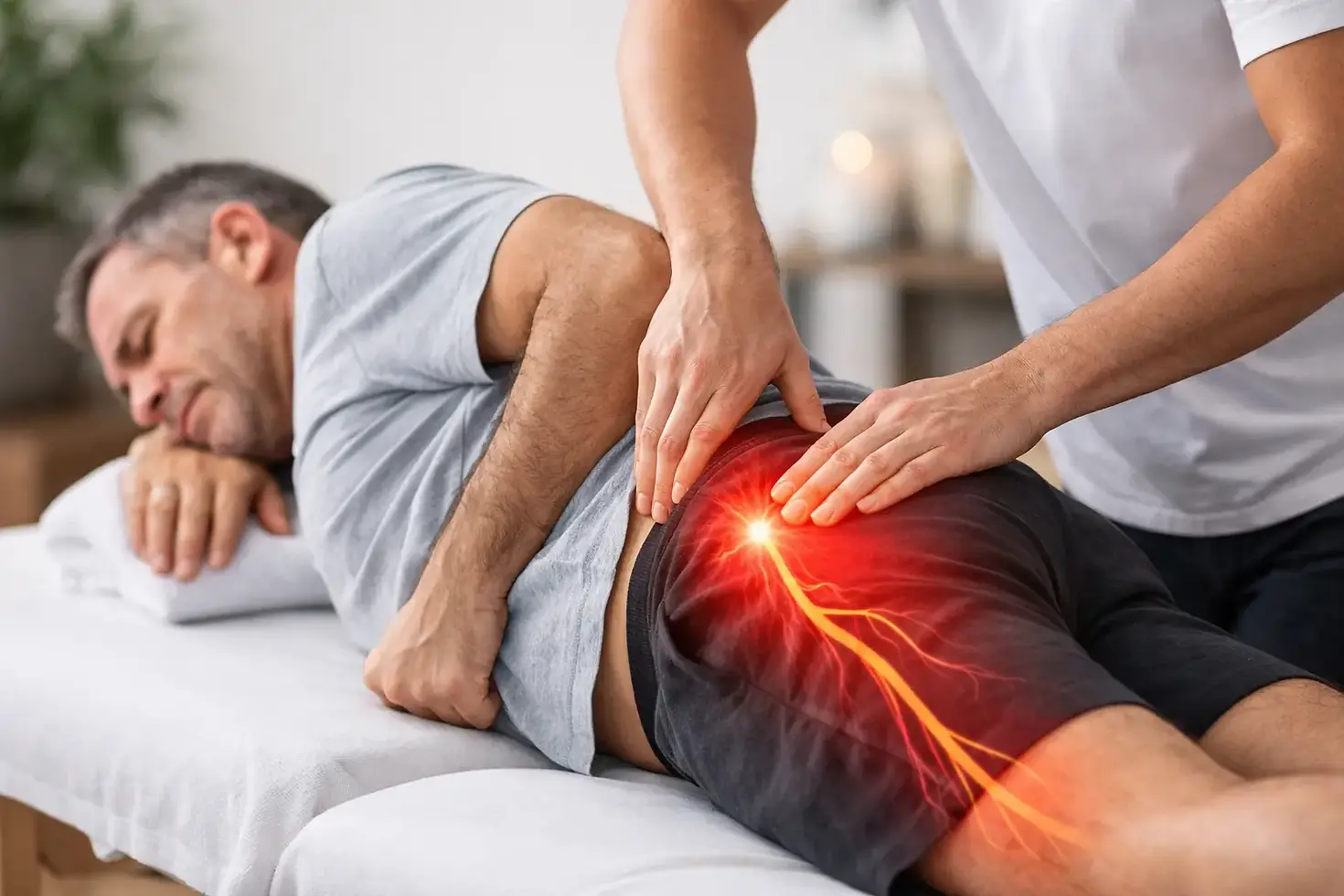
Remedial Massage for Sciatica: Does It Help?
That sharp, nagging pain running from your lower back into your hip or down your leg can make ordinary days feel much harder than they should. If you are looking into remedial massage for sciatica, you are probably not chasing a luxury treatment - you want to sit, walk, sleep and work with less discomfort.
Sciatica is not a condition in itself so much as a pattern of nerve-related pain. It usually happens when the sciatic nerve is irritated or compressed, often by a disc issue in the lower back, joint irritation, muscular tension or inflammation around the pelvis and hips. The feeling can vary from a dull ache to burning, tingling, numbness or a sudden electric-style pain down one side.
How remedial massage for sciatica may help
Remedial massage for sciatica is designed to assess and treat muscles, connective tissue and movement patterns that may be contributing to pain. While massage does not "fix" every cause of sciatic pain, it can be very helpful when tight or overworked muscles are adding pressure, pulling the body out of balance, or keeping the area irritated.
This matters because sciatica often has more than one layer. A person may start with a disc irritation, then begin moving differently to avoid pain. That compensation can tighten the glutes, hip rotators, lower back and hamstrings. Over time, those muscles can become tender and guarded, which adds another source of discomfort on top of the original issue.
A skilled remedial massage therapist works to reduce muscular tension, improve circulation and calm protective muscle spasm. In practical terms, that can mean less pulling through the lower back and hip, easier movement, and a body that feels less braced all the time. For some people, this leads to better walking tolerance, less stiffness first thing in the morning, and fewer flare-ups after sitting.
What sciatica can feel like - and why the cause matters
People often use the word sciatica to describe any pain in the backside or down the leg, but the source is not always the same. Sometimes the problem begins in the lumbar spine. Sometimes the sciatic nerve is irritated by surrounding muscles, including the deep gluteal muscles. In other cases, what feels like sciatica may actually be referred pain from nearby joints or soft tissue.
That is why assessment matters. If the pain is mainly muscular, massage may offer quite direct relief. If the pain is strongly driven by a disc bulge, nerve root compression or significant inflammation, massage may still help the surrounding muscle tension, but it may need to sit alongside other care. There is no one-size-fits-all answer, and a good therapist should be upfront about that.
Common signs that may be linked with sciatica
You might notice pain that travels from the lower back or buttock into the thigh, calf or foot. Some people feel tingling or pins and needles, while others notice numbness or weakness. Sitting for long periods, getting out of the car, bending forward or standing up after rest can all make symptoms more noticeable.
When pain runs below the knee, feels hot or electric, or is paired with numbness, nerve involvement becomes more likely. That does not mean massage is off the table. It just means treatment should be thoughtful, measured and tailored to what your body is presenting on the day.
What happens in a remedial massage session
A proper remedial session should begin with questions, not assumptions. Your therapist will usually ask where the pain starts, where it travels, what aggravates it, and whether you have had scans, injuries, pregnancy-related pelvic changes, heavy lifting strain or long stretches of desk work. They may also look at posture, movement and areas of muscle guarding.
Treatment often focuses on the lower back, glutes, hips and sometimes the hamstrings or calves, depending on your pattern of tension. Pressure should be purposeful, not punishing. With sciatic pain, more force is not always better. When tissues are already irritated, overly aggressive massage can stir things up rather than settle them down.
A well-judged session may include slow work through tight gluteal muscles, release of overactive hip rotators, gentle attention to the lower back and support for better pelvic balance. Sometimes nearby areas need just as much care as the painful spot itself. For example, tight hip flexors or a very stiff mid-back can affect how the lower back loads during daily movement.
Should massage go directly onto the painful area?
Sometimes yes, sometimes no. If the glutes are clearly tight and tender, direct work there may help. If the nerve is highly irritable, pressing aggressively into the area can be too much. In that case, a therapist may work more broadly around the hips, lower back and legs to calm the system without aggravating symptoms.
That balance is one of the strengths of remedial massage. It can be adapted. On a good week, treatment may be a little deeper and more corrective. During a flare-up, the aim may simply be to reduce guarding and help your body settle.
When remedial massage is most useful
Massage tends to be most helpful when muscular tightness is clearly part of the picture. People who sit for work, drive often, lift children, train hard, or carry stress through the lower body commonly develop stubborn tension around the hips and low back. In these cases, remedial massage may ease the extra load those tissues place on the pelvis and spine.
It can also be valuable during recovery. Once the sharpest stage has passed, massage may help restore comfort, mobility and confidence in movement. That can make it easier to return to exercise, daily walking or simply getting through the workday with less strain.
For many people, the benefit is not just physical. Ongoing sciatic pain can be exhausting. When your body is constantly anticipating pain, sleep, mood and concentration can all take a hit. A treatment that helps you feel less tense and more supported can make recovery feel more manageable.
When to be cautious
There are times when massage should be delayed or used only as part of broader care. If you have severe or worsening weakness, major numbness, bowel or bladder changes, unexplained weight loss, fever, or pain after significant trauma, you should seek urgent medical assessment. Those are not signs to massage away.
Even without red flags, some cases need a combined approach. If you have persistent disc-related symptoms, repeated flare-ups or pain that is not shifting, massage may help, but it may work best alongside advice from your GP, physio or another qualified health professional. Natural care can play an important role, but it should be sensible and well timed.
Supporting your results between sessions
Massage works better when it is part of a broader recovery plan. That does not mean you need an elaborate routine. Often, small changes done consistently matter most. Regular walking, gentle mobility work, changing positions more often through the day, and avoiding long periods slumped on the couch can all help reduce the build-up of tension.
Heat may feel soothing for muscular tightness, while some people prefer cold during a sharp flare. It depends on whether the area feels more stiff or more inflamed. Your therapist may also encourage simple stretches or movement advice based on what they find during treatment.
If you are using remedial massage for sciatica, think of it as support for the whole pattern, not just a quick fix for one painful spot. That perspective is often where real progress begins.
A holistic approach to sciatic pain
Because sciatic symptoms can involve muscles, joints, nerves, posture and stress, a holistic approach often makes the most sense. At a clinic such as Just4U Wellness Clinic, remedial massage can sit within a broader model of care that supports pain relief, tension reduction and overall wellbeing. For some clients, that kind of integrated support helps them feel not only less sore, but more like themselves again.
The key is choosing care that matches your body, your symptoms and your stage of recovery. Some people need short-term relief to get through a painful week. Others need regular treatment to unwind chronic tension patterns that keep feeding the problem.
If your pain feels stubborn, do not assume you have to put up with it or push through it. The right treatment can be gentle, practical and genuinely restorative - and sometimes that is exactly what a strained, overprotective body has been asking for.


Comments